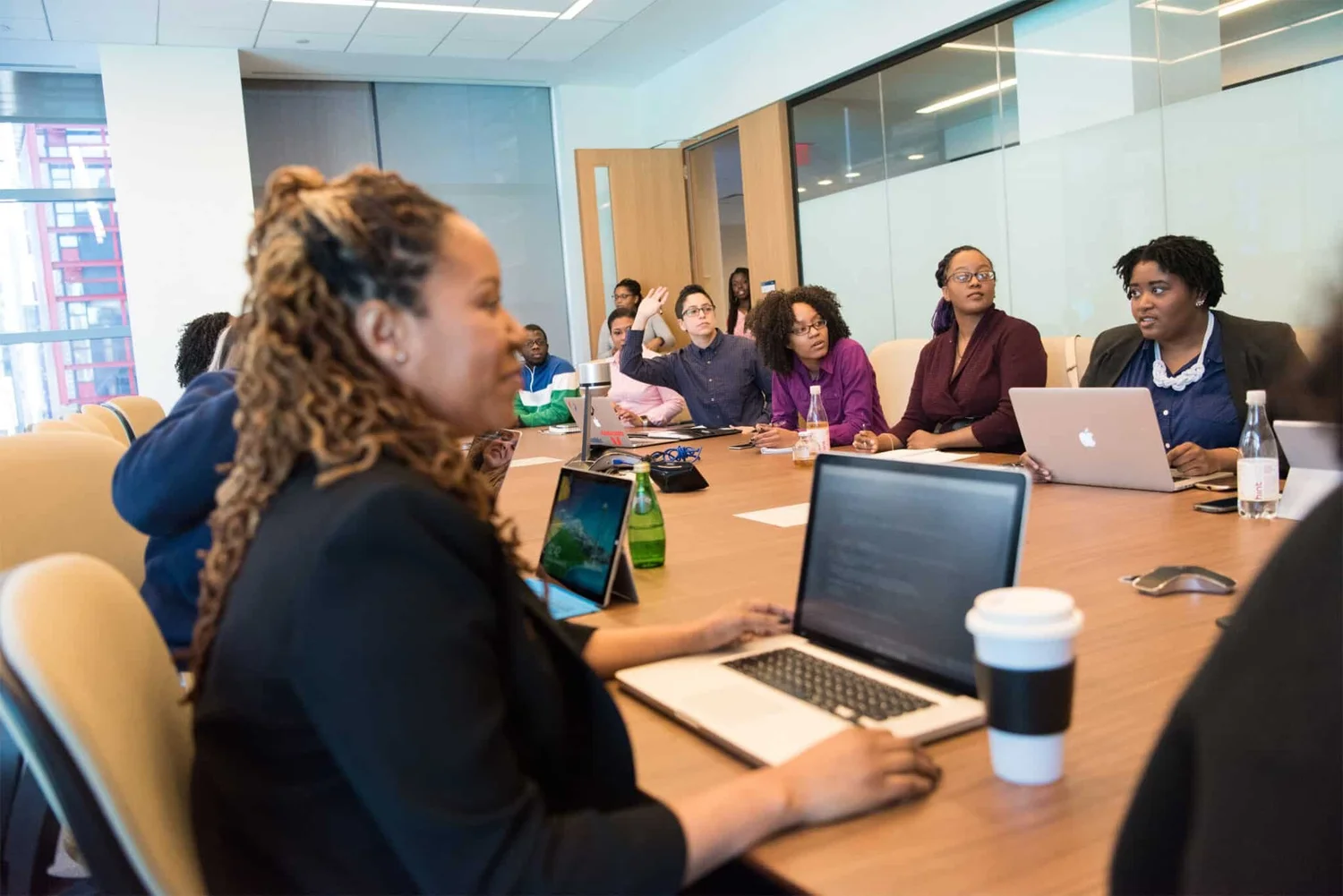
International Women's Day is a day in which many celebrate the progress we're making towards equal pay and fair wages between men and women. Over more than a century, this day has been observed in February on the Julian calendar and March on the Gregorian calendar.
What is encoded in the language—as is often the case—is that International Women's Day is actually only a marker of the progress being made to bridge the wage gap between white men and white women. Black women currently observe equal pay day in August—August 3rd, this year, and it has yet to become cause for celebration.
The Intersectional Wage Gap
When we talk about the gender pay gap, we often cite a single number: women earn 82 cents for every dollar men earn. But this number obscures more than it reveals. White women earn about 79 cents to the white man's dollar. Black women earn 63 cents. Latina women earn 55 cents. Native American women earn 60 cents.
This isn't just a gender issue. It's a race issue. It's a class issue. It's an issue of intersecting oppressions that compound to create deeper inequity for women of color. And any solution that doesn't account for these intersections will fail.
The Pandemic's Unequal Impact
COVID-19 didn't create gender inequity in caregiving—it exposed and deepened it. When schools closed and care systems collapsed, women absorbed the unpaid labor. Many left the workforce entirely. The 'she-cession' wasn't a natural disaster; it was a predictable result of building systems on the assumption that women's labor is infinitely elastic and endlessly free.
For women of color, the impact was even more severe. Already facing wider pay gaps, more likely to be in frontline jobs, less likely to have the option to work from home—the pandemic hit hardest where the safety net was thinnest. Black and Latina women saw the highest rates of job loss, the highest rates of leaving the workforce to provide care.
And let's be clear about what 'leaving the workforce to provide care' means: it means doing essential, demanding, valuable work—for free. It means sacrificing career advancement, retirement savings, and economic security. It means that the economy runs on women's unpaid labor, and that women pay the price.
Building Back Differently
We can't go back to normal because normal was the problem. A post-pandemic world must include universal childcare, paid family leave, and fair wages for care workers. It must value the labor that makes all other labor possible.
This isn't just good policy—it's economic necessity. When women can't work because they can't access childcare, the economy loses their contributions. When caregivers are paid poverty wages, we're saying their essential work doesn't matter. When we build economic systems on unpaid labor, we're building on a foundation that's unsustainable and unjust.
The pandemic showed us what breaks when we don't value care. The question now is whether we'll rebuild differently—or whether we'll return to systems that were always failing the women, especially women of color, who make everything else possible.