Key Takeaways
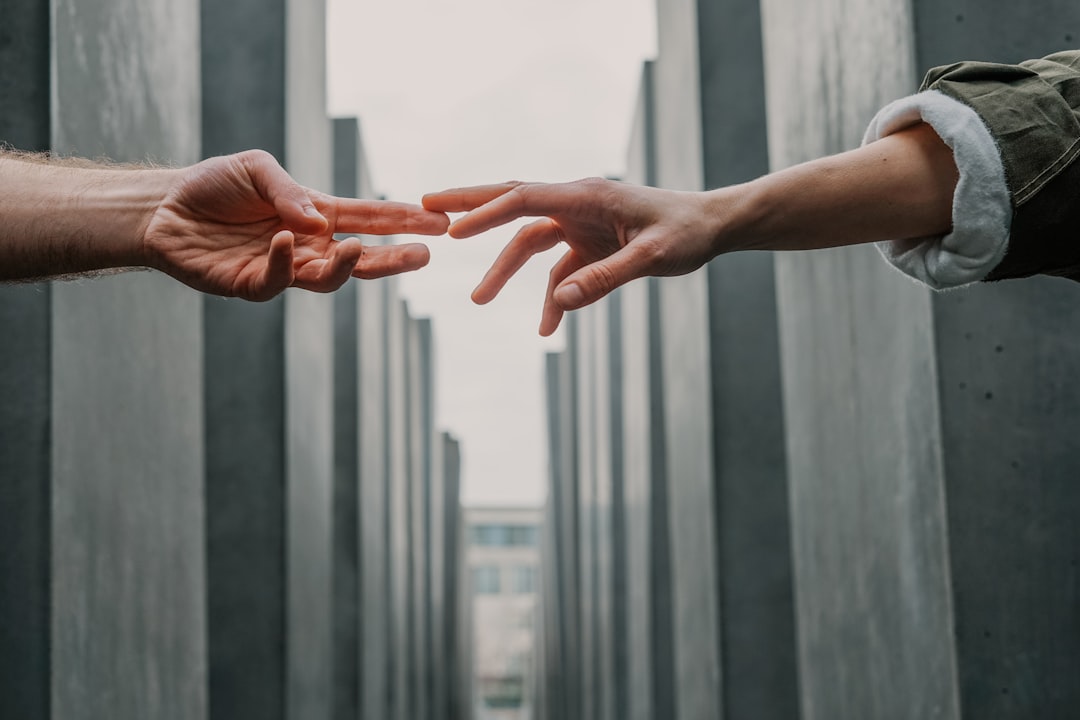
- While tech builds platforms, women are building the human infrastructure of belonging—the connective tissue that holds communities together.
- This is not soft work. It is the hardest work. And the women doing it are among the most consequential builders of our time.
- The most powerful infrastructure for understanding across difference is not a platform—it is a room, a meal, and someone who knows how to hold both.
- Building community for marginalized groups is an act of resistance against systems designed to make people feel like their suffering is a personal failure.
A Note Before We Begin
There's a version of Women's History Month that is entirely backward-looking. We name the women who were erased—the mathematicians, the scientists, the engineers, the organizers—and we mourn what was lost when their names were stripped from the record. We should do that. Last week, we did. We talked about Ada Lovelace, Grace Hopper, the 'Human Computers' Katherine Johnson, Dorothy Vaughan, and Mary Jackson, Margaret Hamilton, Dr. Joy Buolamwini, Dr. Timnit Gebru, Dr. Safiya Umoja Noble, Dr. Ruha Benjamin, Dr. Rediet Abebe, and the pattern that connects them all: build something essential, watch it be taken, watch history be rewritten around the absence of your name.
But this week I want to look at what's being built right now. Because while the AI governance industry debates its frameworks, and the tech industry assembles its DEI slide decks, and the policy world writes its impact assessments, there is a parallel infrastructure being built—one that doesn't get keynote stages at the main conference, that doesn't get the venture rounds, that doesn't get the press release.
Women are building the infrastructure of belonging. Community platforms. Facilitated tables. Career accelerators. Chronic illness coalitions. Founder ecosystems. Retreat spaces where rest is not a reward but a practice. The connective tissue that holds people together when the institutions they're supposed to belong to keep making clear that they don't.
This is not soft work. It is the hardest work. And the women doing it are among the most consequential builders of our time. Here are eight of them.
The Women Building Connection
Lia James — &Human and The Traveling Table
What if the most important technology for closing the empathy gap wasn't an algorithm but a dinner party? Lia James has been asking that question, and then building the answer, for years. As founder of &Human and creator of The Traveling Table, she designs intimate facilitated gatherings—dinners, conversations, curated rooms—that do something most technology can't: they turn strangers into community by designing for the conditions under which real connection actually happens.
I have sat at Lia's table. Not metaphorically—literally. I was a featured guest at The Traveling Table, and I watched what she builds in real time: the careful curation of who is in the room, the facilitation that creates psychological safety without being precious about it, the way she moves through a space as both architect and host. It is a master class in what it means to design for connection rather than just proximity.
What strikes me most about Lia's work is how deliberate it is. She is not hoping people will connect. She is engineering the conditions that make connection possible—and doing it in a world that is increasingly polarized, isolated, and convinced that connection happens through screens rather than across tables. The Traveling Table is, among other things, an argument. An argument that the most powerful infrastructure for understanding across difference is not a platform. It is a room, a meal, and someone who knows how to hold both.
In my work on AI governance, I talk about co-design—the idea that the communities most affected by a technology must be in the room where it's built. Lia has been practicing the human version of that principle for years. If you want to understand how to build genuine inclusion into a system, watch how she builds a room.
Nitika Chopra — Chronicon and The Chronicon Foundation
Building a community for people with chronic illness is an act of resistance against a medical system designed to make you feel like your suffering is a personal failure. Nitika Chopra has been doing that work for years, and has turned it into something I consider one of the most consequential community-building projects in the wellness space. Chronicon—the community she founded—began as a conference: a sold-out New York City gathering with 2,000 livestream viewers that proved there was a hunger for a space where people with chronic illness could be seen, celebrated, and resourced rather than sidelined, pitied, or told to push through.
What Chronicon has become is more than a conference. It is an ongoing online platform, an event tour, a foundation, and a living proof-of-concept that people with chronic illness are not a niche audience. They are a community—one that has been systematically made invisible by a healthcare system that treats chronic illness as a problem to be solved rather than a life to be lived.
I know Nitika personally, and what I know about her is that she doesn't build from theory. She builds from her own lived experience of navigating a healthcare system that wasn't designed for her, and from the knowledge that millions of other people are navigating the same thing alone. Chronicon is the community she needed and didn't have. That is the best possible origin story for a community builder.
Living with sickle cell disease myself, I understand viscerally what it means to be invisible to the systems that are supposed to serve you. Nitika's work is, in part, a response to that invisibility—not a complaint about it, but a construction project. She is building the visibility.
Tania Anaissie — Beytna Design and Liberatory Design
The question Tania Anaissie asks is not 'how do we include communities in design' but 'how do we shift power from heroes to hosts?' That distinction matters more than it might initially sound. The dominant model of social innovation and human-centered design still tends to center the expert, the consultant, the well-resourced outsider who arrives with a methodology and a slide deck. Even when the intention is inclusion, the structure is extraction: we gather input from communities, return to our offices, and produce solutions on their behalf.
Tania's work—through Beytna Design, and as a co-creator of the Liberatory Design movement—is a direct challenge to that structure. Liberatory Design is a framework for design that explicitly centers equity and power, asking not just 'what do communities need' but 'what conditions allow communities to lead.' Her work has moved through US systems—incarceration, political, education, government—with a growing network of collaborators who are learning to facilitate rather than prescribe.
I have worked alongside Tania in spaces where equity is the stated goal and liberation is the actual one, and the difference between those two things becomes very clear very quickly when she's in the room. She has a gift for naming the power dynamics that are operating underneath the official agenda—and for creating conditions in which people who are used to being designed-for can experience what it means to design.
In AI governance, we talk constantly about 'stakeholder engagement' and 'community input.' Tania is building the practice that those phrases gesture toward but rarely achieve. If your organization says it wants to engage communities in AI design, Tania's work is where you need to start.
Esosa Ighodaro — Black Women Talk Tech and Roadmap to Billions
There wasn't a roadmap to billions designed for Black women. So Esosa Ighodaro, along with co-founders Regina Gwynn and Lauren Washington, built one. Black Women Talk Tech is now the largest collective of Black women tech founders in the world—a community of more than 150,000 global entrepreneurs built around a simple premise: Black women are building the next billion-dollar companies, and they deserve a space designed by and for them to do it.
The Roadmap to Billions conference—now in its ninth year—is the largest gathering of Black women tech founders in the world, a space that combines curated investor access, founder community, and the particular kind of belonging that comes from being in a room where you are not the exception.
Esosa has been named one of Entrepreneur Magazine's 100 Most Powerful Women. She has been featured in Forbes, ELLE, NBC, and The Huffington Post. She has spent 15 years building ecosystems for people who were told they weren't the intended audience. In the context of this series—which is, at its heart, about who gets to build and who gets to be seen—Esosa's work is a direct answer to the problem. She is not waiting for the existing infrastructure to include Black women founders. She is building infrastructure that centers them.
Dr. Clare Kennedy Purvis — WELL for Digital Health
In 2017, Dr. Clare Kennedy Purvis was a Stanford-trained clinical psychologist navigating a digital health industry that kept treating her scientific rigor as an obstacle to agile development. She was, frequently, the only woman like her in the room. So she started organizing coffee chats with other women in the same position.
Those coffee chats became WELL—the Women Entrepreneurs and Leaders Lab—which has grown into what is now a premier leadership community for women clinicians and scientists in digital health, offering a Career Accelerator that delivers a digital health 'mini-MBA,' a curated network, and the kind of community that transforms the professional isolation many women in health tech know too well.
WELL is relevant to this series for a specific reason: the gender leadership gap in digital health is not just a pipeline problem. It is an AI problem. The AI systems being built for healthcare are being built predominantly without women clinicians and scientists in leadership roles. The result is systems that replicate the biases of the data they were trained on—biases that include decades of undertreating women's pain, dismissing women's symptoms, and designing clinical trials that used male bodies as the default. Closing the gender leadership gap in digital health is not separate from fixing AI bias in healthcare. It is the same work.
Dr. Sophia Yen — Pandia Health
Dr. Sophia Yen is a co-founder and CEO of Pandia Health, a telehealth company that delivers prescription birth control, emergency contraception, and other women's health needs directly to patients—with a specific focus on reaching people who have been historically underserved by the healthcare system.
She is also a co-founder of the Women's Health Innovators group and a participant in Project W's WEB health-tech ecosystem—a curated community of women founders, investors, and experts building at the intersection of women's health and technology. In these spaces, the work is explicitly about building the connective tissue that allows women health founders to access each other, access capital, and access the expertise that the existing healthcare venture ecosystem has historically withheld.
What I appreciate about Dr. Yen's work is that she is solving a problem from both ends simultaneously: building the product that expands access to care, and building the community infrastructure that supports the women building that product. That dual commitment—to the end user and to the builder—is what distinguishes the most sustainable women-led innovation from the single-product companies that don't make it.
Rea Strawhill — Chronic Illness Creator and Community Builder
Rea Strawhill is one of a cohort of chronic illness creators who have turned social media into something the healthcare system has persistently failed to provide: a space where people with complex conditions can be fully themselves and fully believed.
Rea uses her platform to normalize life with chronic illness—the medical appointments, the flares, the grief, the dark humor, the unexpected joy, the navigating of a world that was not designed for a body like hers. She builds community not through a structured platform or a formal organization but through consistency, honesty, and the particular intimacy that comes from someone saying 'this is my life' and having thousands of people respond 'mine too.'
In the context of this series on who gets coded out: people with chronic illness are systematically underrepresented in AI training data, which means the AI systems making decisions about their healthcare, their insurance, their accommodations, and their employment are making those decisions with an incomplete picture of what their lives actually look like. Creators like Rea are building the visibility that precedes representation. She is not waiting for the AI to see her. She is creating the record.
The Women in My Own Orbit
The eighth woman on this list doesn't have a public platform I can link you to—at least not yet. She is a Black woman executive who has been inside one of those institutions that was not designed for her, risen to a level of leadership that should have been impossible according to everything the system was set up to produce, and carried that leadership with a specificity of care that I have watched transform every room she enters.
She joins our Rest as Resistance retreats in Japan. And what I witness, every time, is the moment she realizes that the urgency she has internalized—the need to always be available, always be performing, always be proving that her presence is justified—is not a personality trait. It is a structural imposition. And it can be put down.
She is not yet writing about this publicly. She will be. When she does, I will send you the link. But I name her here because the infrastructure of belonging is not only built by the people with platforms. It is also built by the women who hold space in their organizations, who mentor without recognition, who create the conditions for others to succeed without credit, who carry the labor of inclusion inside institutions that have not committed to it. Those women are also connection architects. They are also doing this work. They deserve to be named.
Why This Is the Work
I have spent 25 years at the intersection of technology, policy, and liberation. I have watched organizations invest in AI governance frameworks, diversity initiatives, and impact assessments—and I have watched those investments fail, not because the intent wasn't there but because the infrastructure wasn't.
The infrastructure of belonging is not a soft add-on to the work of building equitable technology. It is the foundation. The reason organizations can't build AI that works for everyone is that they don't have the connective tissue—the community, the trust, the genuine inclusion—that would tell them what 'working for everyone' actually requires.
The women in this piece are building that connective tissue. Not in spite of the AI governance work. As a precondition for it. If you are building AI systems, you need to know these women. Not to check a partnership box. Not to satisfy a stakeholder map. But because the community infrastructure they are building is the only way you will ever understand what you are missing.
Keep Going
Lia James: andhuman.co
Nitika Chopra: chronicon.net
Tania Anaissie: beytnadesign.com & liberatorydesign.com
Esosa Ighodaro / BWTT: blackwomentalktech.com
Dr. Clare Kennedy Purvis / WELL: well-women.org
Dr. Sophia Yen / Pandia Health: pandiahealth.com
Rea Strawhill: @reastrawhill
Dr. Dédé Tetsubayashi is a Black, queer, first-generation Togolese immigrant and transracial adoptee living with sickle cell disease. She is a TEDx speaker and global advisor on AI governance, disability innovation, and inclusive technology strategy. She has been featured at The Traveling Table and organizes Rest as Resistance retreats in Japan.